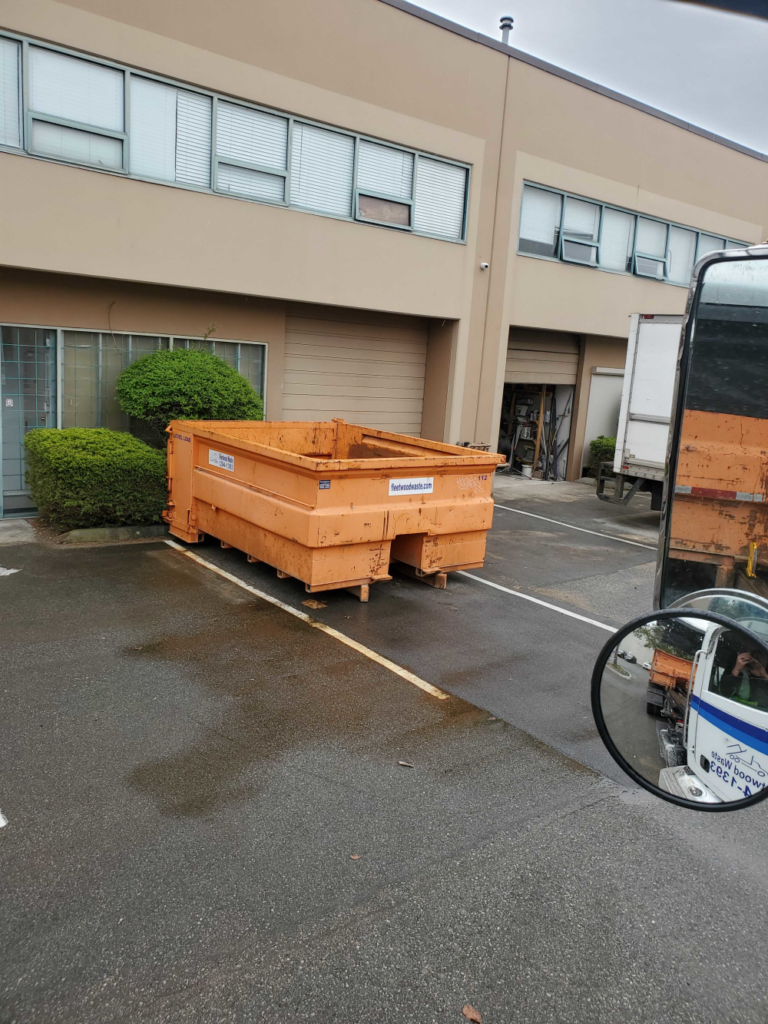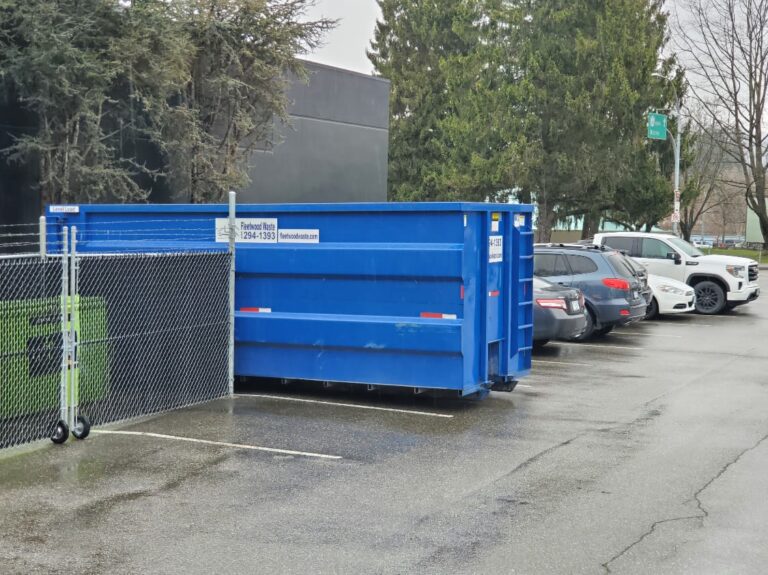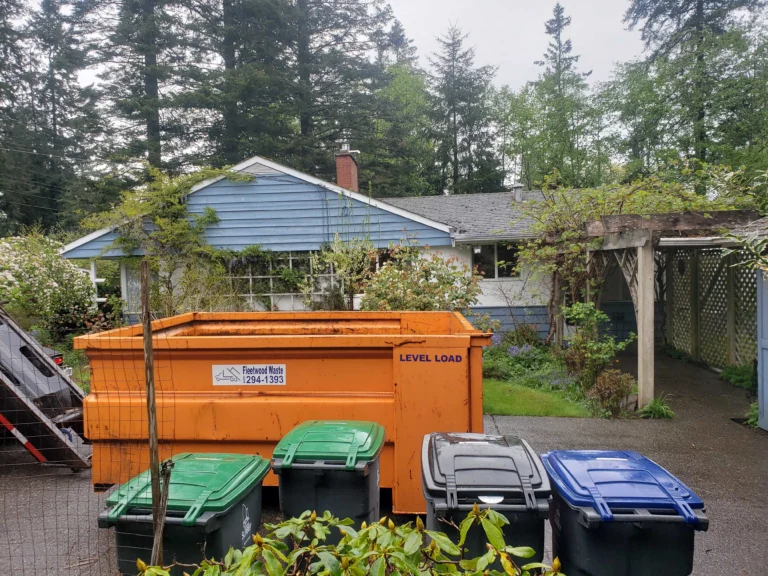
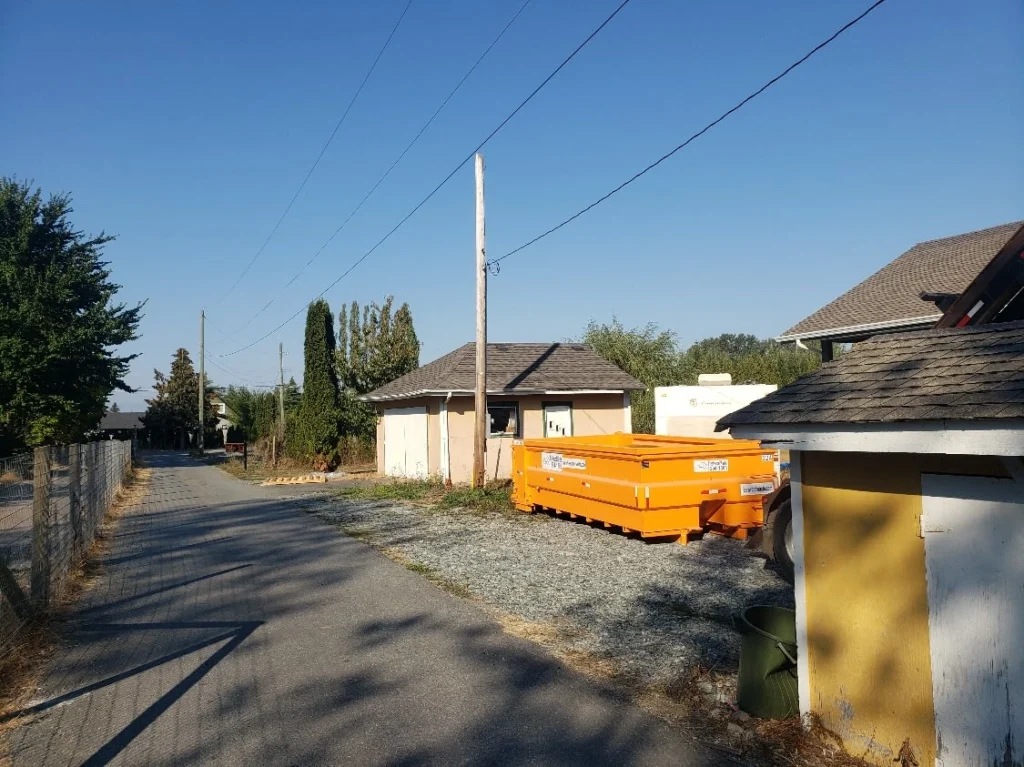
Renting a 20-yard bin sounds simple until you’re wondering whether it will hold your kitchen demo or roofing tear-off. Here are the real dimensions, weight limit, and what fits inside, so you can book the right size the first time.
At a Glance
A 20-yard bin is a mid-size roll-off dumpster: about 22 feet long, 8 feet wide, and 4 feet high, holding roughly 20 cubic yards, or six pickup truck loads, with a 2 to 3 ton weight limit. It’s the go-to size for kitchen and bathroom renovations, roof tear-offs, and garage cleanouts.
How Big Is a 20-Yard Bin, Exactly?
“20 cubic yards” means volume: enough space for 20 boxes measuring one yard on every side. At 22 feet long, 8 feet wide, and 4 feet high, that works out to roughly six pickup truck loads. Dimensions can shift slightly between companies, so confirm the exact footprint before delivery, especially on a narrow driveway.
What’s the Weight Limit on a 20-Yard Bin?
Most 20-yard bins carry a weight limit of 2 to 3 tons (roughly 4,000 to 6,000 pounds). That matters as much as volume, since heavy material — concrete, dirt, shingles, tile — hits the limit long before it fills the space. Going over usually means an overage fee, not a refused pickup, so ask your provider’s rate before loading dense material.
What Fits Inside a 20-Yard Bin?
A 20-yard bin comfortably handles a full kitchen or bathroom renovation (cabinets, drywall, flooring, fixtures), a roof tear-off on an average single-family home, a garage or basement cleanout, or mixed construction debris including clean wood, metal, and drywall. It’s not sized for a full home demolition or large addition — those need a 30- or 40-yard bin.
20-Yard Bin vs. Other Common Sizes
| Bin size | Dimensions (L x W x H) | Weight limit | Best for |
| 10-yard | ~12 x 8 x 4 ft | 1–2 tons | Small cleanouts |
| 20-yard | ~22 x 8 x 4 ft | 2–3 tons | Kitchen/bath reno, roofing |
| 30-yard | ~22 x 8 x 6 ft | 3–4 tons | Additions, large cleanouts |
| 40-yard | ~22 x 8 x 8 ft | 4–5 tons | Full demolition |
Dimensions are approximate and vary by provider — confirm before booking.
Loading a 20-Yard Bin the Right Way
Break down large items, load heavy material first, then fill gaps with lighter debris, and keep everything level with the top rim rather than stacked above it. Hazardous waste — paint, batteries, tires, electronics, chemicals — isn’t accepted. Skipping these steps is the most common reason renters get overage fees or need a second bin.
Key Takeaways
- A 20-yard bin measures about 22 feet long, 8 feet wide, and 4 feet high
- It holds about 20 cubic yards — roughly six pickup truck loads
- The typical weight limit is 2 to 3 tons
- Heavy material like concrete can hit the weight limit before the bin looks full
- Confirm exact dimensions and weight limits with your provider before booking
Frequently Asked Questions
1. How many pickup truck loads does a 20-yard bin hold?
About six full pickup truck loads, depending on how it’s loaded.
2. Can a 20-yard bin fit in a driveway?
Yes. At roughly 22 by 8 feet, it fits most driveways — measure your space and clearance first.
3. What happens if I go over the weight limit?
Most companies charge a per-ton overage fee rather than refusing pickup.
4. What’s the difference between a 20-yard and a 30-yard bin?
A 30-yard bin is about 2 feet taller and holds roughly 50% more material — better for larger renovations or additions.
Conclusion
Knowing the real numbers behind a 20-yard bin — footprint, weight limit, and what it holds — takes the guesswork out of booking, and helps you avoid paying for space you don’t need.
Not sure a 20-yard bin is the right fit? Contact Fleetwood Waste for a straightforward recommendation and a quote based on your job, not a guess.
Confirm your Fleetwood rental
Rock boxes used for dirt or concrete include three days. Mixed-waste bins include five days. Contact Fleetwood before the agreed pickup if you need an extension, and confirm the additional-day charge and revised collection date in your written quote.
Pricing depends on your delivery city, bin, material and load. Confirm the included weight, loading limits and any applicable charges before booking. Drywall requires a separate drywall-only bin; concrete and dirt require a suitable separate container.