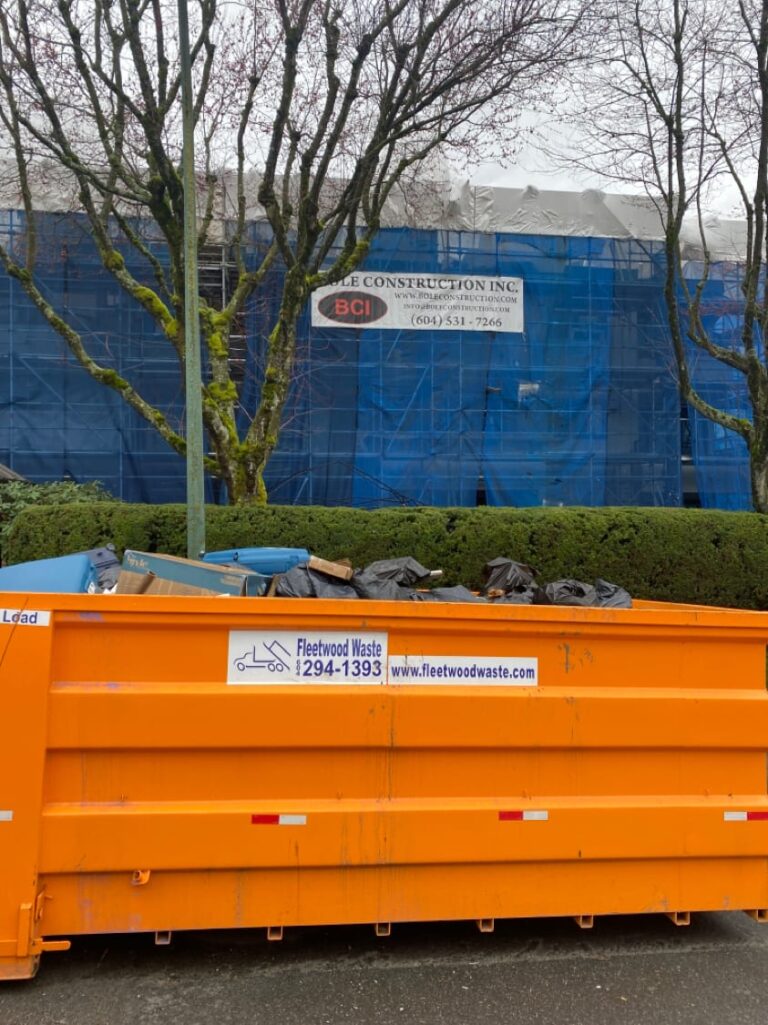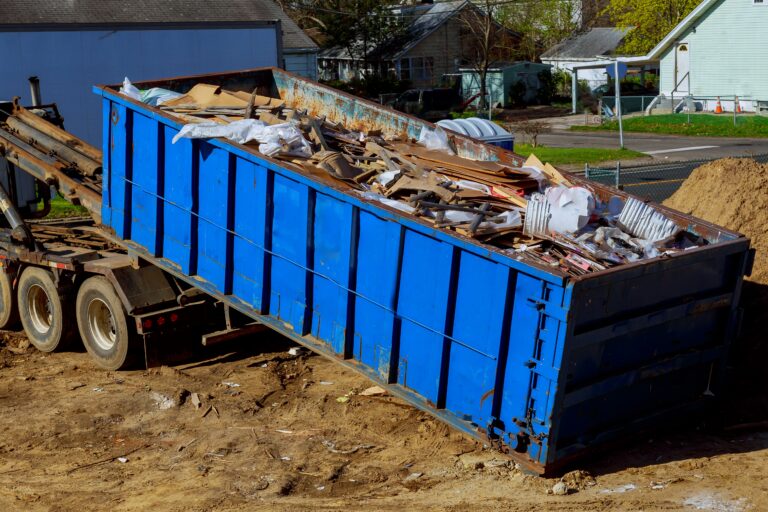
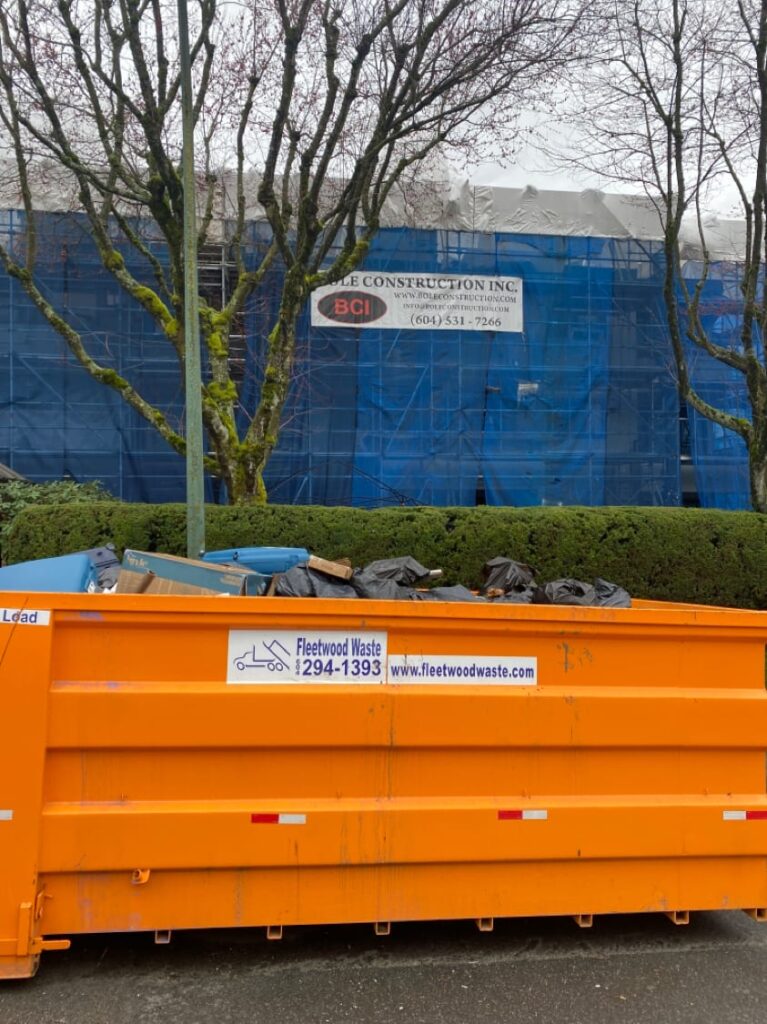
If you’re starting a big clean-up, remodelling, or construction project, one question comes up quickly: Should you rent a dumpster or a construction bin?
At first glance, these containers look similar. Both are large waste bins designed for temporary use. But there are important differences in purpose, cost, and capacity that affect which one is right for you.
In this guide, we’ll explain the difference between a dumpster rental and a construction bin rental, when to use each, and how to avoid common mistakes.
What Is a Dumpster Rental?
A dumpster rental (also called a roll-off dumpster or temporary waste container) is a metal bin delivered to your home, office, or property. It’s meant for general waste disposal like:
- Appliances and electronics — keep out of Fleetwood rental bins; discuss an appropriate separate arrangement.
- Yard waste and landscaping debris
- Household junk from spring cleaning
- Fleetwood mixed-waste bins can take approved wood, cabinets, flooring, furniture and suitable renovation debris. Keep drywall in a separate drywall-only bin and use an appropriate rock box for approved dirt or concrete. Hazardous waste, chemicals, batteries, appliances, electronics and food waste must stay out of mixed-waste bins.
- Items from moving or downsizing
Size options: Dumpsters usually range from 10-yard bins (great for garage clean-outs) to 40-yard containers (for large renovations).
They’re popular because they’re affordable, flexible, and easy to use for both homeowners and small businesses.
What Is a Construction Bin Rental?
A construction bin rental (sometimes called a debris container or C&D waste bin) is designed for construction and demolition projects. These bins are built to handle heavy, dense materials such as:
- Concrete and asphalt
- Bricks and masonry
- Roofing shingles
- Drywall and plaster
- Scrap lumber and metal
Unlike regular dumpsters, these bins are reinforced for weight and can safely carry tons of debris without damage.
They are standard at building sites, road projects, and large-scale demolitions.
Dumpster vs Construction Bin: Key Differences
| Feature | Dumpster Rental | Construction Bin Rental |
| Best Use | Household junk, furniture, yard waste, light remodel debris | Concrete, roofing, lumber, heavy demolition debris |
| Material Strength | Handles light to medium debris | Built for heavy, dense waste |
| Size Range | 10–40 cubic yards | 10–30 cubic yards (reinforced) |
| Weight Capacity | Lower weight limits | High capacity for concrete, asphalt, and roofing |
| Common Locations | Homes, driveways, small businesses | Construction sites, industrial projects |
| Cost | More affordable | Higher due to heavy-duty design |
When to Choose a Dumpster Rental
You should rent a dumpster if your project involves:
- Household junk removal
- Cleaning out basements, attics, or garages
- Yard work and landscaping waste
- Small remodelling debris
- Community clean-up or moving
It’s usually the budget-friendly option for short-term clean-ups.
When to Choose a Construction Bin Rental
A construction bin is the smarter choice when dealing with:
- Concrete, stone, or brick removal
- Roofing tear-offs (heavy shingles)
- Major remodelling projects
- Commercial or industrial demolitions
- Jobs with heavy, bulky materials
It’s worth the investment if your project creates construction and demolition waste.
Cost Breakdown
- Request the rate for your delivery city and material.
- Construction bin rental prices — View city pricing or request a written quote for your bin, material and delivery address.
Pro Tip: Ask about weight limits and overage fees. Going over can double your costs.
Common Mistakes to Avoid
- Choosing the wrong size – Too small means multiple trips, too large wastes money.
- Mixing materials – Don’t put heavy debris like concrete in a regular dumpster.
- Ignoring city permits – Some cities require permits if placed on the street.
- Underestimating weight – Construction materials add up fast.
How to Decide: Dumpster or Construction Bin?
Ask yourself:
- What kind of waste am I dealing with?
- How heavy will my debris be?
- What’s my budget?
- Do I need a bin for my home or a construction site?
If it’s mostly household junk, choose a dumpster rental.
If it’s construction debris, choose a construction bin rental.
Frequently Asked Questions
Q1. Can I put construction debris in a dumpster?
Not usually. Most dumpster rentals don’t allow heavy waste like concrete or bricks because of weight limits. Always check with your provider.
Q2. How do I know what size bin I need?
A 10-yard dumpster is good for a single-room cleanout, while a 20–30-yard container works better for full remodels. Large construction sites often need multiple bins.
Q3. How long can I keep a dumpster or bin rental?
Most companies allow 5 days, with extensions available for an extra fee.
Q4. Do I need a permit for bin placement?
If the bin is on private property (like your driveway), usually not. If it’s on a public street, many cities require a permit.
Q5. What items can’t go in dumpsters or construction bins?
Hazardous waste like asbestos, chemicals, paint, electronics, propane tanks, and batteries are not allowed.
Q6. How do I avoid extra fees?
Separate waste properly, stay within weight limits, and schedule timely pickup to avoid late fees.
Final Thoughts
Both dumpster rentals and construction bin rentals make waste removal easier, but the right choice depends on your project.
- Use a dumpster rental for household junk, yard waste, or light renovations.
- Use a construction bin rental for heavy debris like roofing, bricks, or concrete.
Choosing wisely saves you money, prevents extra fees, and ensures your project runs smoothly.
Not sure which bin you need? Contact a local waste management company today. They’ll help you estimate debris, choose the right size, and arrange delivery.
Get a free quote now and simplify your clean-up or construction project.
Confirm your Fleetwood rental
Rock boxes used for dirt or concrete include three days. Mixed-waste bins include five days. Contact Fleetwood before the agreed pickup if you need an extension, and confirm the additional-day charge and revised collection date in your written quote.
Pricing depends on your delivery city, bin, material and load. Confirm the included weight, loading limits and any applicable charges before booking. Drywall requires a separate drywall-only bin; concrete and dirt require a suitable separate container.